1. Anthropocene Effects and Liquid Hydrogen Solutions
The climate data for 2023 was a wake-up call for the planet: global surface temperatures spiked to 1.18°C above the 20th-century average—the highest since records began in 1850. In this warming world, the transportation sector presents a daunting challenge; its carbon dioxide emissions have nearly tripled since 1970, now reaching almost 8 gigatonnes annually. We no longer have the luxury of merely reducing our footprint; we must eliminate it.
Enter liquid hydrogen (LH2). Imagine a future of silent, soot-free skies and shipping lanes where the only exhaust is a crystalline mist of water. LH2 is not a fringe experiment or an unproven fuel of the future. It is a seasoned, space-proven technology entering its second act. This cryogenic liquid is uniquely poised to decarbonize the heavy-lifters of our global economy—from long-haul trucking to transcontinental aviation—transforming how we move goods and ourselves across the globe.
2. It’s Not New Technology—It’s Space-Age Heritage
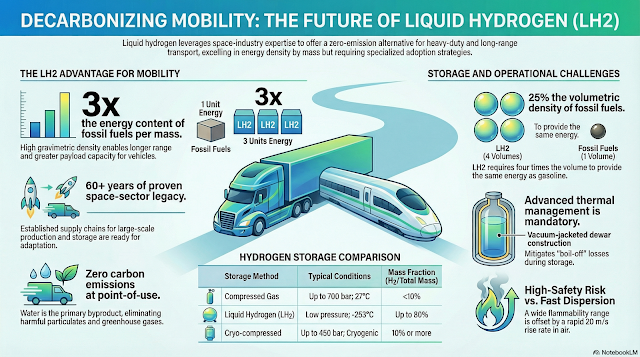
While many view hydrogen as an emerging tech, it actually carries a deep space-age pedigree. Liquid hydrogen has been in continuous large-scale use for over six decades. The timeline is remarkable: from the first gas turbines in the 1930s to the 1950s flight demonstrations of the Martin B-57 Canberra, and finally becoming the lifeblood of the 1960s Apollo program.
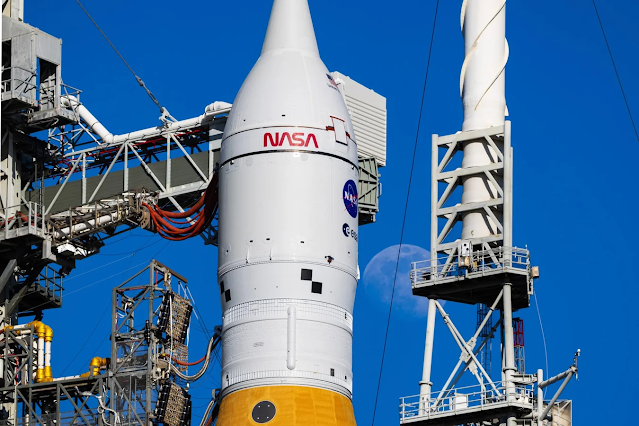
NASA’s experience with the Centaur upper stage and the Saturn rocket stages wasn't just about reaching the moon; it was about mastering the most energy-dense fuel in the universe. Today, we aren't testing the basic physics of LH2—we are simply optimizing the systems for terrestrial costs. This heritage provides a unique safety and infrastructure foundation that other green technologies simply do not have.
"Since LH2 has been continuously used in the space sector for nearly six decades, all the necessary systems and supply chains for large-scale LH2 production, delivery, storage, fueling, and launch vehicle consumption are well established."*
3. The End of the Legacy Fuel Model
The transition to LH2 signals the end of the legacy fuel model. For a century, we have relied on a rigid chain where fuel is extracted in one corner of the world, refined in another, and shipped to a third for use. LH2 enables a decentralized energy node concept.
Because hydrogen can be produced via water electrolysis using renewable microgrids and modular liquefiers, fuel can be generated on-demand at the point of use, such as an airport or a remote trucking hub. We are even seeing the prospect of geologic hydrogen—naturally occurring hydrogen created by subterranean catalytic reactions in iron deposits.
4. The Weight vs. Volume Tug-of-War
Liquid hydrogen presents a counter-intuitive physical profile that makes it the "holy grail" for heavy-duty mobility. By mass (gravimetric density), LH2 packs nearly three times the energy of fossil fuels. However, by volume, it holds less than 25% of the energy content of gasoline.
In the world of logistics, mass equals revenue. For a long-haul truck or a cargo plane, every kilogram of battery weight is a kilogram of lost payload. Because LH2 is so light, it allows these vehicles to maintain high payload capacities and long ranges that battery-electric systems cannot match. While the low volumetric density means tanks must be larger, the trade-off favors the heavy-lifters: planes can fly further and trucks can carry more goods, making the physics of LH2 a direct driver of economic viability.
5. The "Thermos Tank" Revolution
Storing a liquid at -253°C (-423°F) requires high performance insulation. Traditional metal tanks aren't enough; vacuum-jacketed (double-wall) dewar construction is required for most applications. This functions as a super-insulator, utilizing advanced materials like mulitlayer insulation (MLI), aerogels, perlite, or other suitable insulation options within an evacuated space to reduce heat transfer.
To make LH2 viable for the long haul, we distinguish between two critical thermal management strategies:
- Passive Methods (e.g., conduction-optimized structures and MLI to reflect radiant heat).
- Active Methods: (e.g., cryocoolers and cryo-refrigeration to maintain the liquid state indefinitely).
Perfecting these strategies is the key to minimizing boil-off—the costly loss of fuel as it warms.
6. Safety is a Matter of Physics, Not Perception
Public perception of hydrogen is often anchored in myth, but the physics of the molecule tell a different story. Unlike gasoline, which pools on the ground and creates a lingering fire hazard, gaseous hydrogen has a 20 m/s rise rate. If a leak occurs, the fuel dissipates almost instantly into the upper atmosphere.
Hydrogen also has an auto-ignition temperature of 585°C—higher than natural gas. When it does burn, it produces no smoke or soot, eliminating the inhalation risks common in hydrocarbon fires. While the flame is invisible in daylight and requires infrared sensors for detection, its low radiant energy means it is less likely to cause heat damage to surrounding structures than a petrol fire.
"Education and awareness of safe hydrogen usage over time is needed to achieve public and market acceptance."*
7. The Decade of Deployment
We are standing at the threshold of a tiered deployment. In the near-term (0–5 years), we will see LH2 increasingly used for buses, rail, and marine vessels. The medium-term (5–10 years) will bring commercial commuter aircraft and drones into the fold. Beyond 10 years, LH2 will integrate into the long-range aviation sector, supported by a global footprint of renewable energy hubs.
As we chase the "1-1-1" goal—$1 for 1 kg of clean hydrogen in one decade—we are leveraging machine learning and generative AI to optimize every step of the supply chain. The question is no longer if hydrogen will power our world, but how quickly we can scale. Are we ready to trade the convenience of the traditional gas pump for a fuel system that finally matches the scale of our climate challenge?
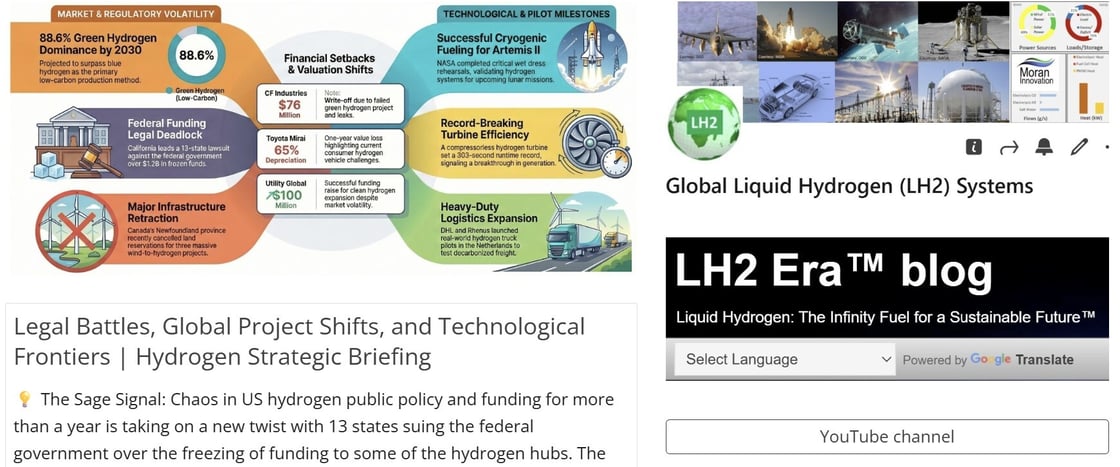
[This blog post was originally drafted by Google's AI-enabled NotebookLM using only content from the footnoted source. It did require some editing for clarity, formatting, and other minor issues such as a peculiar overuse of "air quotes".
Nevertheless, it represents a noteworthy capability for several reasons that currently plague other AI options: hallucinations are mitigated by constraining the sources; the content can remain private to the user and not used for training; chatbot prompts can be used to explore the sources; and various "studio tools" can be applied.
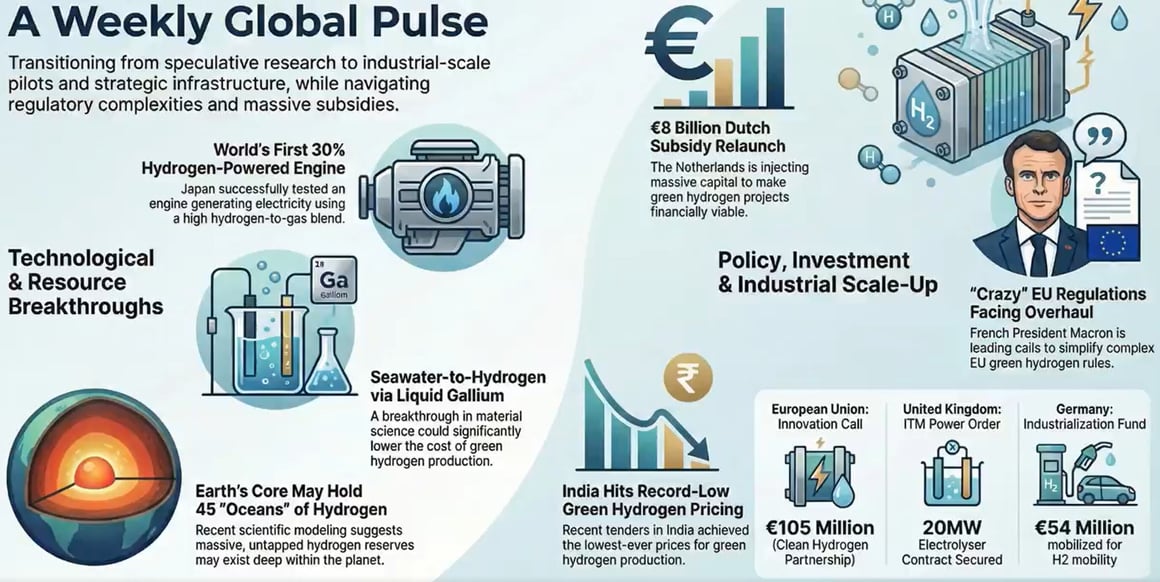
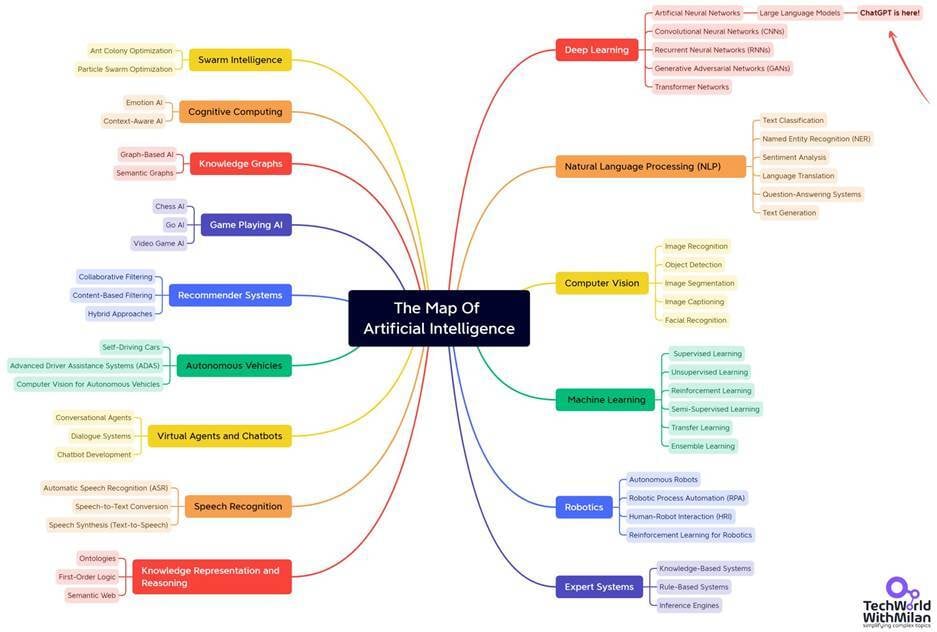
The studio tools include auto-generated mind maps, podcasts, videos, articles (like the draft of this post), flashcards, quizzes, infographics, slide decks, and data tables. Up to 50 content sources can be contained in a single notebook with the free version enabling integrated exploration of a chosen topic. Paid versions allow hundreds of sources.
What to do with all these rapidly advancing AI tools? Misusing or overusing them is a problem both online and within organizations. But ignoring their utility or refusing to explore how they add value is a losing proposition.
Personally, I plan to continue experimenting with how AI might help us accelerate the deployment of hydrogen systems. If that's of interest to you, visit the www.h2sage.com site and click on the request email updates button.]
Author Bio
Matt Moran is the Managing Member at Moran Innovation LLC, previous Managing Partner of Isotherm Energy, and creator of H2 Sage™ resources and tools for hydrogen systems. He's been developing power and propulsion systems for more than 40 years; and first-of-a-kind gas, slush, and liquid hydrogen systems since the mid-1980s. Matt was also the Sector Manager for Energy & Materials in his final position at NASA where he worked for 31 years. He's been a founder or key contributor in seven technology-based startups; and provided R&D, engineering, and innovation consulting to several hundred organizations. Matt has three patents and more than 50 publications including his online Cryogenic Fluid Management guide and Decarbonizing Mobility with Liquid Hydrogen SAE report. He has created and taught liquid hydrogen courses, webinars, and workshops to global audiences.