|
Wednesday, December 17, 2025

Wednesday, November 19, 2025
Hydrogen Workforce Needs
 |
| Photo credit: David Blekhman |
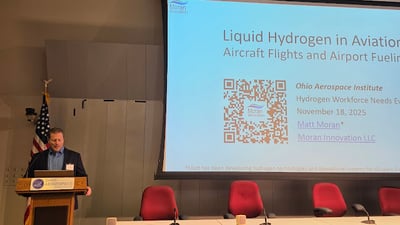
Yesterday I gave an invited presentation on liquid hydrogen in aviation spotlighting some of the organizations and individuals at the forefront of hydrogen aircraft flight testing, engine development, and airport operations. This will also be the topic of a longer discussion and Q&A for the December 3rd Mission Hydrogen webinar.
The presentation slides along with supplemental content and hyperlinks to more details are available in the "Aviation" briefing at https://h2sage.com. Free registration for the Mission Hydrogen webinar is available here: https://mission-hydrogen.com.
Hydrogen Workforce Needs
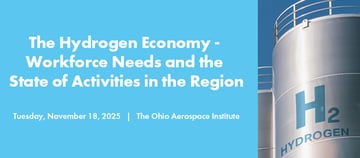
The event held on November 18th at the Ohio Aerospace Institute (OAI) was a second in-person gathering supporting the DOE project on hydrogen workforce needs led by the University of Toledo (UToledo). Andrew Gyekenyesi of OAI and Mark Mason of UToledo kicked off the event setting the stage for the project context, progress, and key insights. Regional survey results were then presented by Kevin Cranick of Workforce Intelligence Network.
Some themes that continued to be built upon as the day progressed included:
- Creating the right balance of workforce training and upskilling building on foundational community college and university curricula and supplementing with hydrogen specific knowledge depending on the needs of specific job roles.
- Credentialing programs, short courses, trades upskilling, and other shorter training opportunities to provide key skills quickly and tailored to various industry sectors and applications.
- The need to create a pipeline of education and awareness programs in secondary (high schools) and perhaps earlier, as well as activities that provide broader public awareness directly or indirectly to parents and other local community members.
Industry Perspectives
My aviation presentation was part of the industry portion of the event to provide examples of how hydrogen systems are being developed, deployed, and operated. Mark Haberbusch of NEOEx Systems described some of their new systems that liquefy hydrogen (electrolytically produced from microgrid renewables or from other sources), and refuel long range drones with liquid hydrogen.
David Perzynski followed with a portfolio of initiatives under development at Honda for hydrogen vehicles, engines, and other applications. Nick Vargo of Babcock & Wilcox finished up the industry portion with a description of their chemical looping technology for producing low-carbon hydrogen from various hydrocarbon feedstocks using engineered FeO particles.
Education and Training Perspectives
The afternoon session started with a presentation by Pat Hufnagel-Smith of Creative Links summarizing some findings from her work on building a resilient energy workforce amid uncertainty. Later presenters confirmed that her publication on this topic is the best available and a gold standard.
Anil Bika of the University of Delaware presented information on some of the hydrogen initiatives, electrochemical engineering program, high school programs, and key industry collaborations at the Center for Clean Hydrogen. The importance of building an ecosystem of diverse stakeholders was evident.
David Blekhman of California State University, LA followed with highlights of the impressive array of projects, sustainable energy curricula, fueling stations, hands-on internships, and industry collaborations he has developed over many years as Technical Director of the Hydrogen Research and Fueling Facility.
Tiffany Howard of South Louisiana Community College provided a thought provoking final presentation on community college strategies and tactics during times of economic stagnation drawing on her experiences in a variety of roles and insights from previous technology trends in driverless trucking and broadband communications.
Panel Discussions and Networking
Sujata Shetty of UToledo led a panel discussion amongst the afternoon presenters that included audience thoughts and insights. Although it covered a great deal of themes, a few takeaways from memory:
- Supplemental and complementary training and curricula related to hydrogen that can build upon foundational certifications and degrees may be the best approach (i.e., rather than specific "hydrogen" degrees)
- Uncertainty in public policy, economic, and other factors requires developing adaptable and robust training and upskilling options
- Attracting, training, and retaining an emerging and skilled hydrogen workforce requires addressing multiple worker needs including aspirations for meaningful work, career stability, personal growth, and quality of life.
In addition to the scheduled talks and presenters, I enjoyed catching up with existing colleagues along with some new and inspiring contacts across the economic development, industry associations, and other key actors in the hydrogen and sustainable energy ecosystem.
Bill Whittenberger and Linda Buckosh of the Ohio Fuel Cell and Hydrogen Consortium continue to advocate for hydrogen-related businesses to various stakeholders within the state and well beyond. Keri Zipay of TeamNEO and Jing Lyon (past interim CEO at Brite Energy) are economic development champions who help make critical connections and assist new businesses in the region.
An unexpected bonus was meeting Veronica Vaca of Cobra Industrial Activities who is focused on geologic hydrogen (both naturally occurring and stimulated by selected fluid injection). This is a topic that is rapidly gaining interest from investors and industry, and has the potential to significantly lower hydrogen supply costs for various use cases.
Author Bio
 Matt Moran is the Managing Member at Moran Innovation LLC, and previous Managing Partner at Isotherm Energy. He's been developing power and propulsion systems for more than 40 years; and first-of-a-kind gas, slush, and liquid hydrogen systems since the mid-1980s. Matt was also the Sector Manager for Energy & Materials in his final position at NASA where he worked for 31 years. He's been a cofounder in seven technology-based startups; and provided R&D, engineering, and innovation consulting to several hundred organizations. Matt has three patents and more than 50 publications including his online Cryogenic Fluid Management guide and Decarbonizing Mobility with Liquid Hydrogen SAE report. He has created and taught liquid hydrogen courses, webinars, and workshops to global audiences.

Friday, November 14, 2025



Subscribe to:
Comments (Atom)